


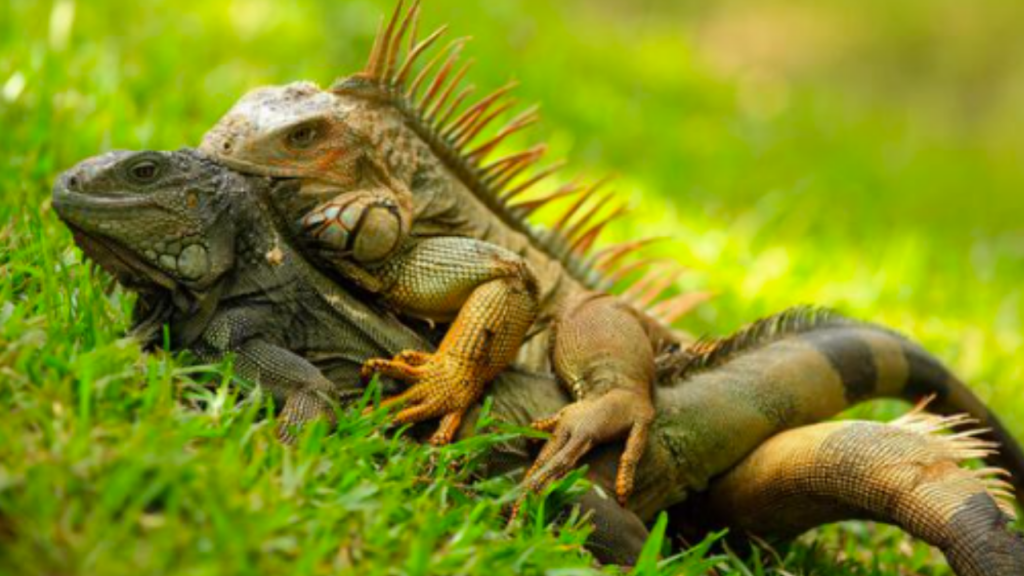
The rumor has circulated for decades in Central America, sparking both laughter and curiosity: the male iguana has two penises. A tropical exaggeration? A beachside joke? Not at all. Behind this surprising anatomical detail lies a finely tuned reproductive system—another reminder that nature values efficiency above all else, without any concern for human taboos.
Two Penises… but Not for Show
In male iguanas, this does not mean two penises in simultaneous use. Instead, they possess two hemipenes, neatly stored at the base of the tail. During mating, only one is used, while the other remains in reserve. No excess, no spectacle—just a biological backup system. Nature dislikes waste, especially when reproduction is at stake.

Plan A, Plan B… and Species Survival
In the often harsh environments of Central America—tropical forests, mangroves, rocky areas, and even urban neighborhoods—successful reproduction is never guaranteed. Having two hemipenes allows the male to adapt to the female’s position, increase the chances of successful copulation, and continue reproducing even if one organ is damaged. Less sensational than it sounds, but far more strategic. Think foresight… reptile-style.
As If That Weren’t Enough: He Also Changes Color
As if this anatomical feature weren’t already enough to draw attention, male iguanas add another surprise during the breeding season: they change color. Their usual green can shift to orange, copper, or yellow hues—sometimes strikingly vivid. This transformation is not decorative. It’s a hormonal signal to females and a visual warning to rival males. In short: I’m ready—and this territory is taken.

When Everything Becomes Visible… and Humans Look Away
During peak reproductive periods, hemipenes may become visible, often after mating, stress, or hormonal surges. In younger males, it can even happen without any obvious trigger—something like a biological false start. For the iguana, it’s completely normal. For the human calmly sipping coffee nearby, it’s usually an unexpected moment not listed on the day’s itinerary.
A Strange but Highly Coded Anatomy
Hemipenes are neither smooth nor ornamental. They feature internal folds and sometimes small hooks that ensure effective attachment during mating. Each species has its own unique configuration, preventing crossbreeding between species. Even in the jungle, compatibility is not left to chance. Nature is very open-minded… and extremely organized.
Dare We Ask: What About the Female—Two Vaginas?
The answer is simple: no. Female iguanas do not have two vaginas. Unlike males, females have a single reproductive opening called the cloaca. This multipurpose opening serves reproduction, waste elimination, and egg-laying.
This system—common among reptiles, amphibians, and birds—may seem surprising, but it is remarkably efficient. Nature did not aim for perfect symmetry between male and female anatomy, but for functional logic. While the male multiplies options to maximize reproductive success, the female centralizes essential functions into a single, proven structure.
Other Striking Facts About Iguana Reproduction
Breeding Season Makes Males… Clearly Aggressive
During mating season, male iguanas become intensely territorial. They intimidate, chase, and sometimes fight rival males to defend their territory and access to females. While these confrontations can look dramatic, serious injuries are rare. Most encounters are displays of strength, posture, and dominance—a clear way to establish hierarchy without escalating to lethal conflict.
Head Bobbing: When Iguanas “Talk”
Iguanas communicate primarily through body language. During breeding season, males perform frequent head bobs, inflate their dewlap—the flap of skin beneath the throat—and adopt specific postures. These signals attract females and warn rivals to keep their distance. No sounds, no shouting—everything is conveyed through attitude.
The Female Chooses… and Can Refuse
Contrary to popular belief, female iguanas do not automatically accept the first male that approaches. They may reject suitors deemed too weak, too aggressive, or insufficiently dominant. Reproduction involves genuine selection, requiring males to demonstrate strength, territorial control, and survival potential. In the iguana world, the final decision clearly belongs to the female.
Conclusion: The Iguana Does Nothing Halfway
Two hemipenes, territorially aggressive males, a body-language code worthy of a secret society, and females who choose without compromise—among Central American iguanas, reproduction is serious business. Nothing is left to chance: not displays of strength, not communication, not partner selection.
The iguana is neither excessive nor provocative. It is simply the product of a pragmatic, efficient evolutionary process. Behind behaviors that may surprise or amuse human observers lies an uncompromising reality: when it comes to survival and reproduction, nature doesn’t negotiate—it optimizes… and it couldn’t care less about our discomfort.
- Avec l’Excelsior et le Goombay : découvrez le golfe de Papagayo dans toute sa splendeur
- Expatriés au Costa Rica : pourquoi la résidence légale devient-elle si importante?
- La Floride perd-elle ses snowbirds au profit du Costa Rica?
- Tamarindo Natura Lodge: Une oasis de tranquillité près de Tamarindo
- Tout crisser là et s’expatrier ?