

Here we present five of the Ticos’ favorite meals—those most commonly found on family tables, in neighborhood sodas, and at community gatherings. These dishes do more than simply feed people: they reflect Costa Rican culture, traditions, and even elements of the country’s history. Each recipe tells a story about Costa Rica—its relationship with work, family, the land, and solidarity.
“Costa Rican cuisine isn’t spectacular, but it’s honest. And that’s exactly what makes it authentic.”
— Daniela Rojas, Heredia
One detail may surprise some readers: every one of these dishes includes rice, either directly on the plate or as a side. This is neither coincidence nor mere culinary habit. Historically, rice became a central food in Costa Rica as early as the 19th century—affordable, filling, and well suited to local agricultural conditions. It quickly became the main energy source for families, especially in rural and working-class communities. Over time, rice went beyond its role as a simple starch to become a true cultural pillar, symbolizing stability and continuity. These five meals are living illustrations of that reality, at the crossroads of gastronomy and everyday history.
Gallo Pinto: The Dish That Starts Every Day
Gallo pinto is much more than a dish—it’s a national ritual. Its name literally means “spotted rooster,” a reference to the contrast between rice and black beans, reminiscent of a rooster’s speckled feathers. Almost every morning, it appears on Costa Rican tables.

It is made of rice and black beans sautéed with onion, bell pepper, and cilantro, often enhanced with a touch of Lizano sauce This meal is mainly served at breakfast.
“A gallo pinto without Lizano is like a beach without the sea—it looks right, but it’s not.”
— Fabiola Hernández, Puntarenas
It is typically served with eggs, fresh cheese, plantains, and sometimes meat. The flavors are mild and gently seasoned, reflecting the overall character of Tico cuisine. Found throughout the country with subtle regional variations, gallo pinto was born from simple, economical cooking before becoming a powerful identity symbol—synonymous with consistency, ingenuity, and comfort.
Casado: The Complete Plate That Feeds Costa Rica
Casado is the everyday plate par excellence. It’s the meal found in nearly every soda at lunchtime—the one that feeds workers, families, and students alike. It includes rice, beans, a fresh salad, cooked vegetables, ripe plantain, and a choice of protein: chicken, beef, pork, or fish. The flavors are well balanced, blending sweetness, saltiness, and freshness.
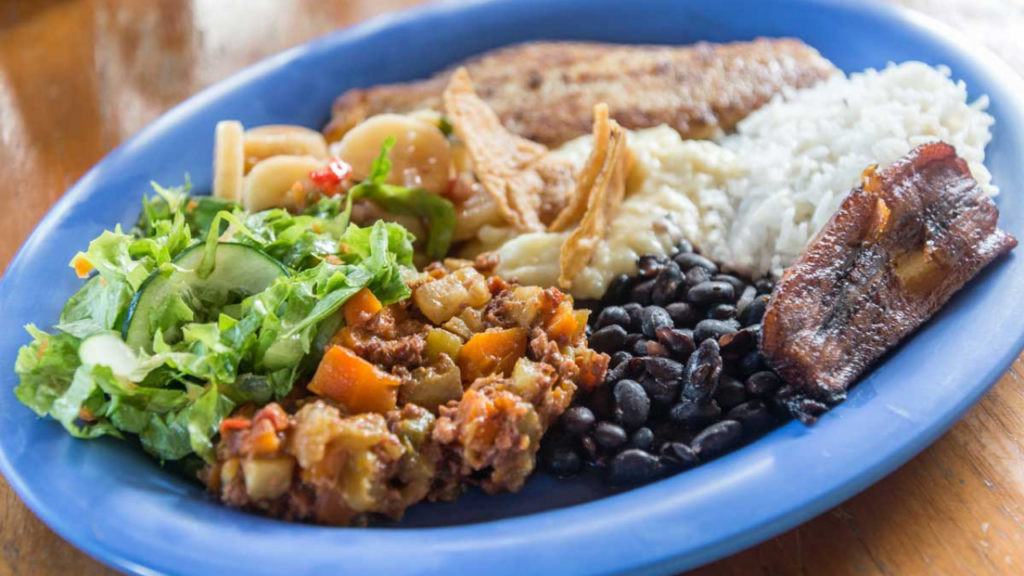
The origin of the word casado is deeply social. It literally means “married man.” Originally, it referred to the full, nourishing meal prepared by wives for their husbands before they left for work, often in the fields or on construction sites. Having a casado meant having a home, stability, and a substantial meal.
“A good casado is perfect balance. If the plate is full, you know you’ll last all day. It’s been the foundation of our diet forever.”
— Carlos Méndez, Alajuela
Single men, by contrast, often had to settle for much more modest meals, sometimes just a tortilla with cheese. Over time, casado became a national standard while retaining its symbolism of a reassuring, balanced, and complete meal.
Olla de Carne: A Tradition That Simmers Slowly
Olla de carne is the dish of slow time, home, and sharing. This traditional soup, made with beef slowly simmered alongside root vegetables—yucca, chayote, carrot, corn, and potato—holds a special place in Costa Rican culinary culture, especially on Sundays. Its rich, nourishing broth reflects a peasant cuisine deeply connected to the land and the seasons.
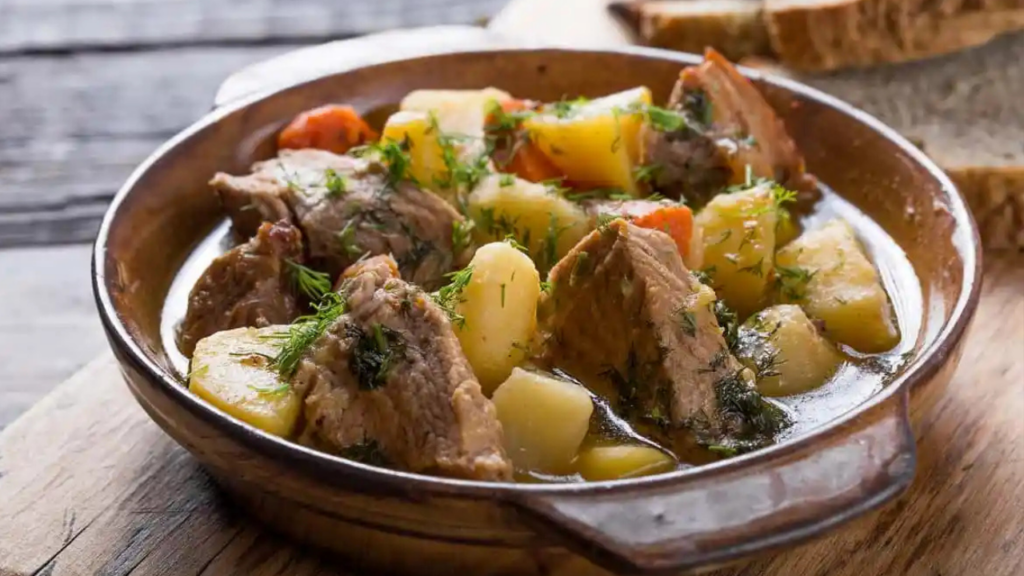
Traditionally, it is served with a small bowl of white rice on the side, added according to appetite either directly into the broth or eaten alongside it. A true comfort food, it is especially popular in cooler regions of Costa Rica, such as mountainous areas and the capital, where lower temperatures naturally invite slow-cooked meals. It is less common in beachside tourist villages, where the heat encourages lighter fare, though it can still be found in some traditional establishments.
For many Québécois living in Costa Rica, olla de carne immediately brings back a familiar memory: it closely resembles Québec’s traditional vegetable and meat boil. Same principle, same slowness, same generosity—a large pot, simple vegetables, long-cooked meat, and a meal designed to bring people together. This resemblance often creates an emotional bridge between cultures, linking North and South through a shared idea of comforting, family-centered cooking.
Arroz con Pollo: The Classic—Again and Again
Arroz con pollo is the dish of celebrations—and of every celebration. Made with fragrant yellow rice, shredded chicken, vegetables, and mild spices, it is served at birthdays, school events, fundraisers, community gatherings, and family celebrations. Its flavors are rounded, accessible, and universally pleasing, making it a safe choice for feeding both young and old. It also represents a reliable staple in nearly every soda across the country.
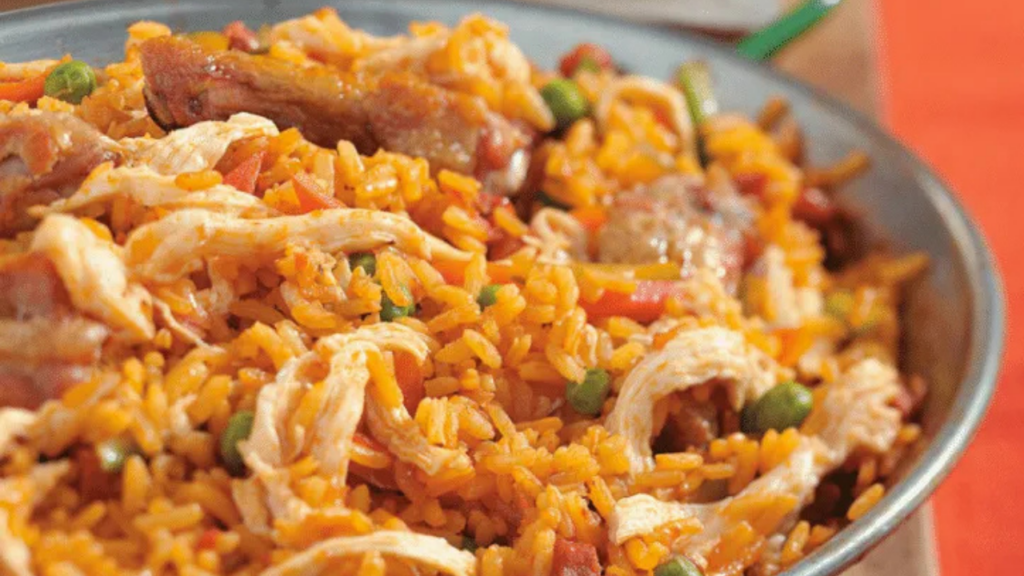
So widespread is this dish that it has inspired a humorous popular expression: arroz por siempre. When a Tico smiles and says, “otra vez arroz con pollo… arroz por siempre,” it’s not really a complaint—it’s an acknowledgment that no matter the event, this classic always returns as the trusted centerpiece of gatherings.
“When there’s a party, a school meeting, or even a funeral, there’s almost always arroz con pollo. We joke about ‘arroz por siempre,’ but we truly love it.”
— José Luis Quesada, Heredia
Its distinctive yellow color traditionally comes from achiote, also known as annatto, a natural spice extracted from the seeds of the annatto tree. Used for centuries in Central America, achiote is especially present in certain regions of Costa Rica, where it is cultivated and integrated into local cuisine for both its color and its mild, earthy flavor. More than just a coloring agent, it is part of the country’s culinary heritage. It can be purchased in its natural seed form or as a paste in local supermarkets.
Loved, reassuring, and instantly recognizable, arroz con pollo has become a timeless dish—a symbol of celebration, tradition, and the culinary consistency that Ticos evoke with affection and a touch of self-mockery.
Chifrijo: Crunchy, Simple, and Thoroughly Tico
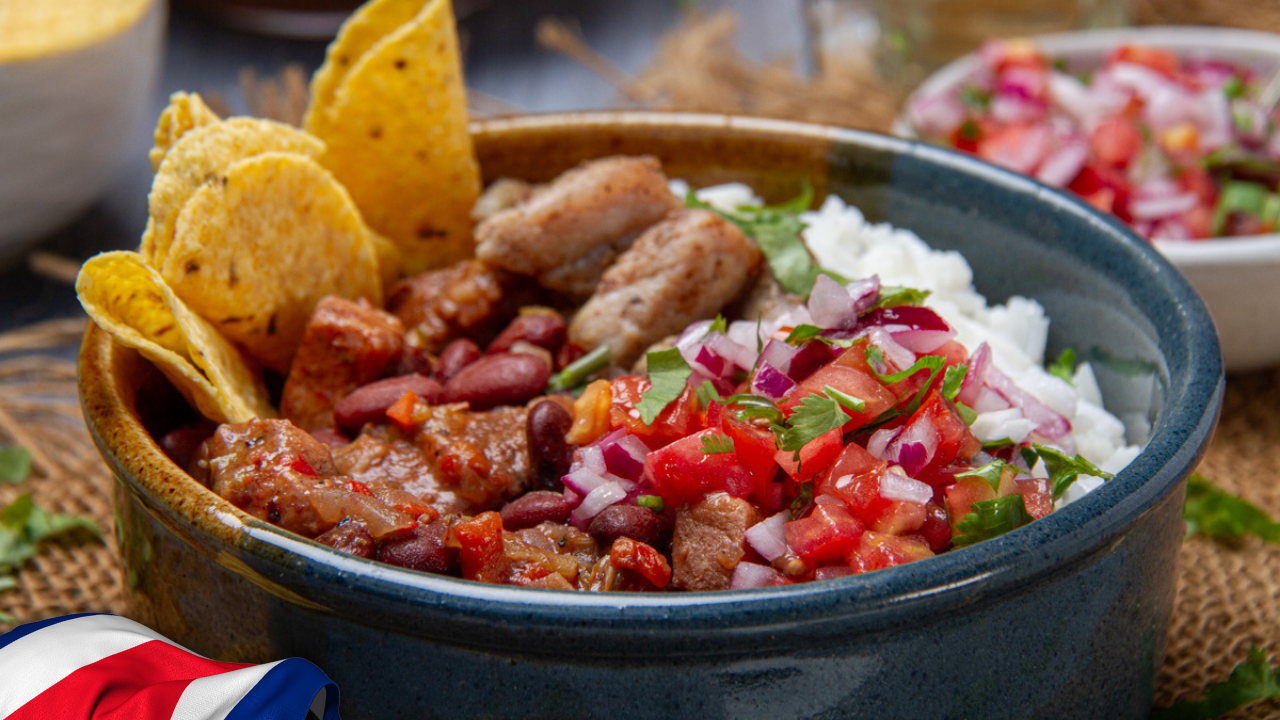
Chifrijo represents a more modern, festive side of Costa Rican cuisine. Extremely popular in bars and cantinas, it consists of rice, red beans, crispy fried pork pieces, pico de gallo, and sometimes avocado, served with tortillas or chips. The flavors are bold and contrasting: crunchy, rich, tangy, and fresh all at once.

It is most commonly found in urban and tourist areas throughout the country. A relatively recent dish, chifrijo illustrates the evolution of Tico cuisine—able to incorporate new habits without ever abandoning its popular roots.
Conclusion
To truly understand these dishes—and what they say about Costa Rica—you have to taste them where they live every day: in the sodas. Sodas are small, often family-run local restaurants with no pretension, serving generous, affordable home cooking. They are the people’s canteens, where workers, families, and neighborhood regulars eat. You order a casado at noon, a gallo pinto in the morning, an olla de carne on Sunday—no complicated menus, no sophisticated décor.
“Sodas are where you understand how Costa Ricans really eat. No luxury needed—just a simple, warm plate made with heart.”
— Rocío Araya, Liberia
Visiting sodas is far more than an economic choice—it’s a cultural immersion. It’s where you eat like the Ticos, at their rhythm, sharing their habits and flavors. Through gallo pinto—the “spotted rooster” turned national emblem—casado born from family realities, olla de carne served with its familiar bowl of white rice, the eternal arroz por siempre, and festive chifrijo, Costa Rican cuisine reveals itself as something lived on the street corner, in a simplicity that is both intentional and deeply human.
- Avec l’Excelsior et le Goombay : découvrez le golfe de Papagayo dans toute sa splendeur
- Expatriés au Costa Rica : pourquoi la résidence légale devient-elle si importante?
- La Floride perd-elle ses snowbirds au profit du Costa Rica?
- Tamarindo Natura Lodge: Une oasis de tranquillité près de Tamarindo
- Tout crisser là et s’expatrier ?